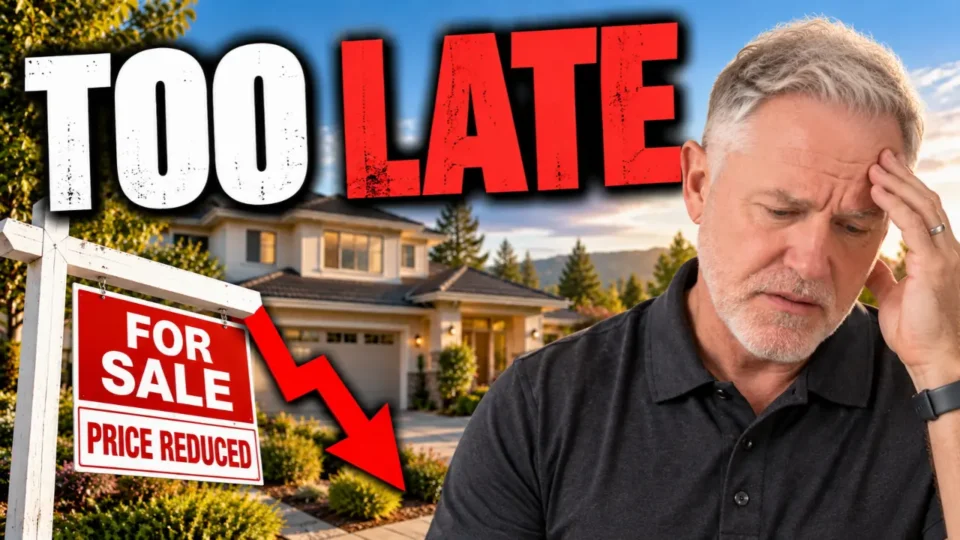
For most people leaving California for good, selling is the smarter move. Once you run the real numbers on a San Jose home with over a million dollars in trapped equity, renting it out usually means sitting on a huge asset that pays you almost nothing every month.
Watch the full breakdown below, then keep reading.
In this video, I take the pro-rental argument seriously, then walk through the one number almost nobody runs before deciding to keep their house as a rental.
I’ve been selling homes in San Jose for 22 years, and I want to be straight with you right up front. I’m a real estate broker. The easy money for me is telling every single person reading this to sell. That is not what I’m here to do. Some of you should absolutely keep your house, and I’ll tell you exactly who. But most of you are not keeping it because it’s smart. You’re keeping it because selling feels like a decision, and keeping it feels like not having to make one.
Here’s who I’m talking to. You’ve been in your San Jose home 10, 20, maybe 30 years. You’re sitting on well over a million dollars in equity. And you’re headed to Texas, or Tennessee, or Florida, somewhere your money finally goes further. Everywhere you turn, your neighbor, your brother in law, some guy in a comment section who read a book about passive income, they’re all telling you the same thing. Don’t sell it. Rent it out. Keep the asset.
Let’s actually run this.
The Real Case for Keeping Your House
If I don’t take the other side seriously, nothing else I say is worth listening to. So let me be clear. There are real reasons to keep your San Jose home, and they’re good ones.
Start with Prop 13. Your property tax is basically frozen on what you paid decades ago. A brand new buyer walks in and pays tax on today’s value, which could be three or four times what you’re paying. That low tax bill is a genuinely rare thing, and it disappears the day you sell. You can’t take it with you, unless you’re moving to another part of California and using a Prop 19 base year value transfer. I’ve covered that scenario in other videos.
Then there’s your mortgage. A lot of you locked in a rate under 3 percent. That money doesn’t exist anymore, and it’s not coming back anytime soon.
So on paper, you’ve got a house with a frozen tax bill and almost free money attached to it. Why would you ever let that go? There’s more:
- Renting keeps a door open. If the new state doesn’t work out, if you miss the weather or the grandkids or the tacos, you’ve got a home to come back to.
- If everything else you own is sitting in the stock market, this house is your one hard asset near one of the biggest job centers on the planet.
These are not dumb arguments. This is why smart, careful people keep the house.
What Most Sellers Don’t Realize About the Tax Bite
I know some of you are already thinking about taxes. Thirty years in the home, you sell, and the government takes a big bite of the gain. Yeah. That’s real, and I’m not going to pretend it isn’t. But here’s the part most people get wrong: they assume the whole gain gets taxed, and it usually doesn’t.
Under the Section 121 exclusion, a married couple filing jointly can exclude up to $500,000 of the gain on a primary residence from federal tax, or $250,000 if you’re single, as long as you owned and lived in the home for at least two of the last five years. Only the gain above that gets taxed. On a home you’ve owned for decades, that exclusion can shield a big chunk of what you were dreading.
And here’s the timing piece almost nobody thinks about. The moment you turn your primary residence into a rental, the clock starts on that two-of-five-year window. Rent it out too long and you can lose the exclusion entirely, which can quietly turn a “keep it a few years and see” decision into a very expensive one.
There are also strategies like a 1031 exchange if the home is truly held as an investment, but that’s a different animal with strict timelines and rules, and it doesn’t mix cleanly with the primary residence exclusion. I’m not a tax professional, and none of this is tax advice. Every situation is different. Go run your actual numbers with a CPA who knows your specifics before you decide anything. Just don’t hold onto a house that’s bleeding you every month over a tax bill you’ve never actually added up.
The Number That Quietly Takes It All Apart
Here’s what almost nobody runs. It’s the opportunity cost on your equity. The money that’s trapped inside the house.
Let me walk one clean example. Say your home would rent for a solid monthly number. Sounds great. Rent covers the mortgage, maybe then some. But then you actually add it all up. Property tax. Insurance. Upkeep. And by the time you’re honest about all of it, you’re at break even. Maybe a little underwater.
So now look at what you’ve got. You have well over a million dollars of your own money locked inside that house, and in cash flow terms it’s earning you almost nothing. Over a million dollars, paying you close to zero every month, and you’re calling it an investment.
Here’s the test, and this is the whole thing right here:
If you would not buy this exact house, at these exact numbers, as an investment today, with your own cash on the table, then you don’t actually want to own it as a rental. You’re just avoiding the decision to sell.
Would you buy this house today as a rental? If the answer’s no, you already have your answer. You’re just not saying it out loud yet.
But It’s Still Appreciating, Right?
Here’s where a lot of you push back on me. Sure, you say, but the house is still going up. It’s still appreciating. And you’re right. It probably is. I’m not going to stand here and tell you San Jose real estate is going to tank.
But here’s the catch. You can’t spend appreciation. It’s not in your pocket. It’s a number on a page that you don’t see a dime of until the day you sell. And in the meantime, you’re paying every single month for a gain you can’t touch.
And that money in your equity would grow somewhere else too. Parked almost anywhere sensible, it keeps growing, and it actually pays you while it does. So appreciation isn’t a reason to keep this house. It’s a reason to own something that’s going up, and this house isn’t the only thing that does that.
Now let me be fair, because not every house is the same. A house with a couple hundred thousand in equity that puts real money in your pocket every single month? That’s a real rental. That’s an actual investment. A house with well over a million trapped inside it, sitting at break even? That’s not an investment. That’s just money you’re too nervous to move. Same street, totally different call.
The Part Everyone Forgets: A House Is a Living Thing
Everything I just said assumes the house behaves. That it sits there quietly and does nothing but appreciate. That’s not how it works. A house costs money every year whether somebody’s renting it or not.
Some of you are already ahead of me. You’re thinking, I’ll just hire a property manager, then I’m not really a landlord. It’s passive. It’s handled. I hear this all the time, and it’s wrong.
A property manager doesn’t make you not a landlord. You still make every real decision. You still pay for every repair, every replacement, every surprise. And now you’re paying somebody on top of all that. Figure around 10 percent of the rent every month off the top, plus a placement fee that’s often a full month’s rent every time a tenant moves out and you have to find a new one. That break even we talked about just quietly turned into a loss.
And we’re not even done. Here’s what living in a house lets you get away with. You let things slide. The roof’s got a few more years in it. The paint can wait. That drippy thing under the sink, you’ll get to it. When a tenant lives there, you don’t get to slide on any of it. Every one of those becomes a phone call you have to answer.
And tenants ask for everything. I’ve genuinely seen a tenant call the property manager out to change a light bulb. A light bulb.
Then there’s the one that keeps landlords up at night. I know an owner who kept their place, moved out of state, felt good about it. Came back about five years later. The house was destroyed. Around $50,000 in damage. The lease said four people. Eleven had been living there.
But I’m not telling you that to scare you. For every horror story, there are thousands of boring, completely fine rentals where nothing goes wrong. Vet your people, and most of the disasters just never show up. I own a couple of out of state rentals myself, so I’m not talking theory. And I’ll tell you, over the years I’ve had trouble with tenants I was absolutely sure would be no problem. The maintenance and the requests, though? Those come no matter how good your tenant is.
So When Should You Actually Keep It?
I told you some of you should keep it, and I meant it. Here’s when it makes sense:
- The numbers genuinely cash flow. Not break even. Actual money in your pocket every month, after the manager, after the repairs, after you’ve set aside something for the stuff that breaks.
- There’s a real, honest chance you’re moving back, say inside a couple of years. If that’s you, the cost of keeping it is really just you buying yourself the option to come home. That can be worth it.
- You’d genuinely buy this house as an investment today, at these numbers, with your own cash. If that’s a yes, you’re a real investor. Keep it, go with my blessing.
But here’s the honest version. If you’re leaving and you’re not planning to come back, the burden of proof is on keeping the house, not on selling it. Selling is the default. Keeping it has to earn its spot.
What Selling Actually Gets You
I’ve spent this whole time on what keeping it costs. Let me flip it. Take that equity that’s just sitting there doing nothing. It moves. You put it somewhere that actually pays you every month. Or you buy your next place outright, in a state where the same money goes twice as far, and you walk in the door owing nobody anything.
And then there’s the part you can’t put a number on. Nobody calling you at 2am about a water heater in a house you don’t even live in anymore. Nobody asking you to change a light bulb from three time zones away. Not lying awake wondering how many people are actually in there. You’re just done. Money free, head free.
Frequently Asked Questions
Should I sell or rent my house when I leave California?
For most people moving out of state permanently, selling is the smarter move. A San Jose home with over a million dollars in equity sitting at break even is not an investment, it’s money you’re nervous to move. Rent it out only if it truly cash flows, if you may move back soon, or if you’d buy it as a rental today at these numbers.
Does renting out my San Jose home really lose money?
It can, once you’re honest about the full cost. Property tax, insurance, upkeep, roughly 10 percent to a property manager, and turnover fees often push a rental that looks like break even into an actual monthly loss.
What is opportunity cost on home equity?
It’s what your trapped equity could be earning elsewhere. If over a million dollars of your own money is locked in a house paying you close to zero each month, that same money invested sensibly could grow and pay you at the same time. That gap is your opportunity cost.
How much capital gains tax will I pay when I sell my San Jose home?
Under the Section 121 exclusion, a married couple filing jointly can exclude up to $500,000 of gain, or $250,000 if single, as long as they owned and lived in the home for at least two of the last five years. Only gain above that is taxed. Talk to a CPA about your specific numbers, since factors like depreciation and how long you rent the home can change the outcome.
Should I keep my San Jose house just for Prop 13 and my low mortgage rate?
Prop 13 and a sub 3 percent rate are real advantages, but they’re not reasons on their own to keep a house that’s costing you money every month. Run the actual numbers before letting a tax benefit talk you into holding a losing rental.
Will renting my home affect my tax exclusion when I eventually sell?
Yes. The Section 121 exclusion requires you to have lived in the home for two of the last five years before the sale. Rent it out too long and you can lose the exclusion, which is one of the biggest hidden risks of the “keep it and see” approach.
Let’s Run Your Actual Numbers
If you’re staring at this exact choice on your own San Jose home and you want somebody to run your real numbers with you, your house, your equity, not some generic rule off the internet, that’s the conversation to have. Before you list, before you rent. Reach out. That’s what I’m here for.
About the Author
Kip Barnard is a licensed real estate broker with 22 years of experience serving San Jose and Santa Clara County, with deep roots in the Cambrian and Willow Glen neighborhoods. Along with his partner Tam, he leads the Barnard Group at Compass, where the focus is protecting sellers, reducing risk, and giving honest guidance rather than a sales pitch. Kip owns out of state rental property himself, so the landlord math in this post comes from firsthand experience, not theory.
Kip and Tam | Barnard Group
DRE# 01428934 | Compass
This article is for general information only and is not tax or legal advice. Consult a licensed tax professional about your specific situation before making a decision.