Why does the Zestimate on my San Jose home seem inaccurate, and what should I trust instead when determining my home’s true market value?
The Zestimate is an algorithm-generated starting point, not an appraisal. It cannot see your upgrades, your floor plan, or your home’s condition, and in San Jose’s micro-markets like Cambrian and Willow Glen, those blind spots often translate into valuations that are off by tens of thousands of dollars or more.
Why This Matters Right Now in San Jose
If you are thinking about selling your home in San Jose, the number you anchor your pricing to will shape everything, from how many offers you attract to how long your home sits on the market. And right now, the stakes are especially high.
Active listings in Santa Clara County jumped 26.4% year over year as of September 2026, according to the California Association of REALTORS (C.A.R.). That means you have more competition than you did a year ago. At the same time, the median price for an existing single-family home in Santa Clara County reached $1,920,000 in Q3 2026, per C.A.R.’s Housing Affordability Index. With the 30-year fixed mortgage rate averaging 6.86% in September 2026 (C.A.R., citing Freddie Mac data), only 23% of Santa Clara County households can afford that median-priced home.
So what happens when you base your listing price on an inflated automated estimate? You narrow an already constrained buyer pool even further, and your home risks languishing while correctly priced homes sell around it. Understanding exactly why these automated estimates miss the mark is the first step toward protecting your equity.
What the Automated Estimate Actually Is and Why It Falls Short in San Jose
Let me be direct about what an automated valuation model, or AVM, actually does. It pulls data from public records, tax assessments, and recent sales across a broad geographic area. Then it applies a mathematical formula to generate an estimate.
Here is what it does not do:
- Walk through your home. It has never seen your kitchen, your bathrooms, or your backyard.
- Evaluate your upgrades. A full remodel versus original 1960s finishes? The algorithm cannot tell the difference.
- Assess your floor plan. An open-concept layout that today’s buyers want versus a choppy, segmented plan? Invisible to the model.
- Account for condition. Deferred maintenance, a new roof, updated plumbing, none of that registers.
What I tell my clients is this: the algorithm is working off location and square footage at its core. As any homeowner knows, houses can vary wildly by upgrades and condition, even on the same street. Two homes with identical square footage in Cambrian can differ by hundreds of thousands of dollars depending on what has been done to each one. The algorithm simply cannot capture that.
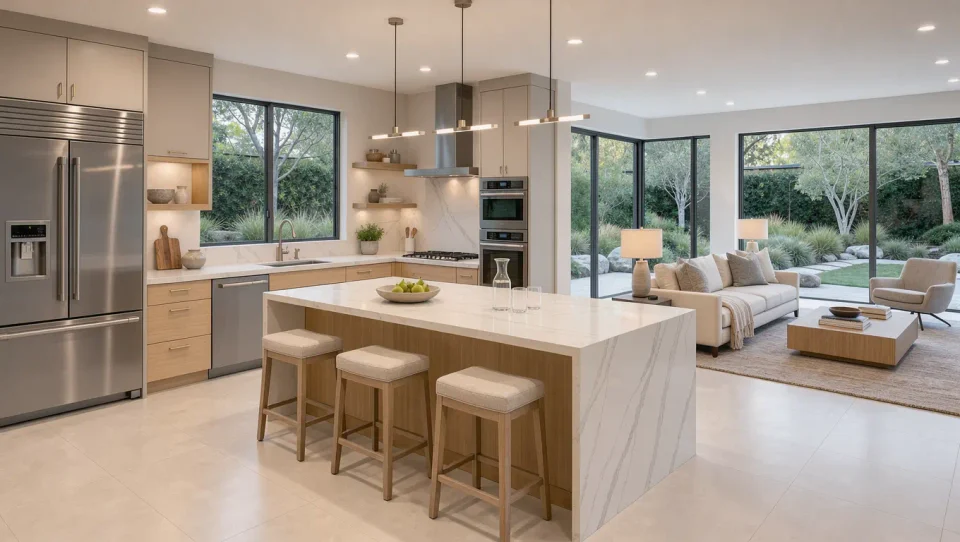
Even the fine print on the estimate’s own page acknowledges it is providing a wide range, not a definitive value. Yet one of the most common mistakes I see is homeowners treating an inflated number as gospel. Nothing could be farther from the truth.
How San Jose’s Micro-Markets Make Automated Estimates Even Less Reliable
San Jose is not one market. It is a collection of distinct neighborhoods, and the differences between them are significant enough to throw off any algorithm relying on broad geographic data.
Cambrian and Willow Glen Are Not Interchangeable
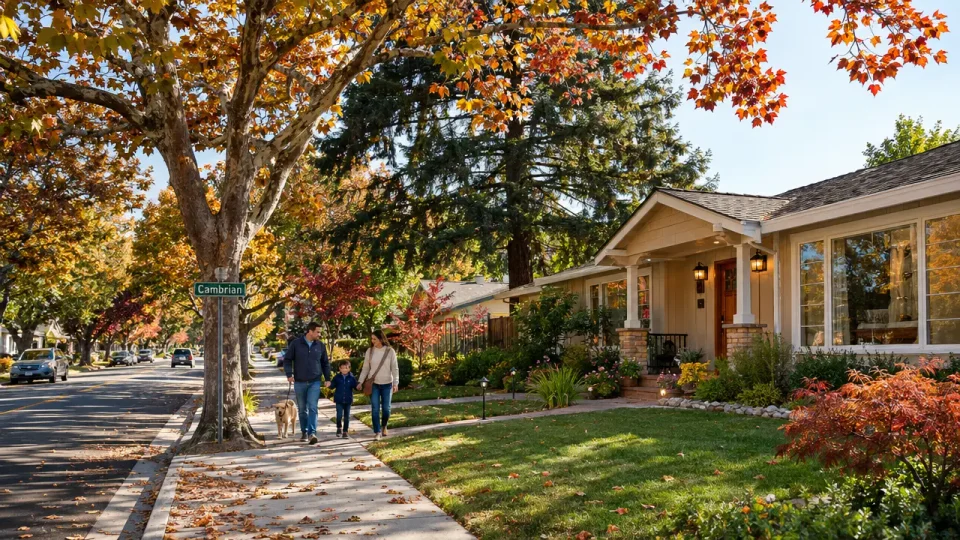
Cambrian and Willow Glen sit just minutes apart, but they have different lot sizes, architectural styles, school attendance boundaries, and buyer demographics. A sale in one neighborhood is not a reliable comparable for a home in the other, yet an AVM may pull from both, or from even more distant parts of San Jose, to generate its estimate.
Street-Level Differences Matter
Within Cambrian alone, you will find differences based on proximity to parks like Cambrian Park Plaza, distance from busier corridors, and whether a home sits on a cul-de-sac versus a through street. These variables influence what buyers will pay, but they are invisible to a formula pulling county-wide data.
With 35 years in real estate and more than $1.3 billion in Silicon Valley residential transactions over my career, I can tell you that the nuances between neighborhoods, and even between streets within the same neighborhood, are where the real valuation happens. An algorithm is simply not equipped to make those distinctions.
The Inflated Estimate Trap and What It Actually Costs You in Cambrian and Willow Glen
Here is the scenario I see play out too often. You pull up your home’s automated estimate, see a number that feels good, and decide that is what your home is worth. Maybe you even add a little on top, because you know you have a great backyard or a renovated primary bath. You list high, confident the market will meet you.
But it does not work that way. Consider the current data: statewide, the sales-price-to-list-price ratio was 98.8% in September 2026, per C.A.R. The median days on market statewide was 29 days in September 2026, also per C.A.R.
And the longer a listing sits, the more buyers wonder what is wrong with it. Eventually, you end up reducing your price, sometimes below where you should have started, just to generate fresh interest.
In a market where only 23% of households in Santa Clara County can qualify to purchase at the county median, per C.A.R.’s Q3 2026 data, you simply cannot afford to price out the buyers who can afford your home. An inflated automated estimate can lead you to do exactly that.
What a Comparative Market Analysis Gets Right That the Algorithm Cannot
A Comparative Market Analysis, or CMA, uses many of the same data inputs as the algorithm, recent comparable sales, neighborhood trends, price per square foot. But here is the critical difference: a CMA is prepared by a licensed professional who has actually been inside homes, walked your neighborhood, and understands what local buyers value.
A thorough CMA for a Cambrian or Willow Glen home accounts for:
- Specific comparable sales in your immediate neighborhood, adjusted for condition, lot size, and upgrades.
- Current competition, including how many similar homes are active and what they are asking.
- Buyer demand patterns specific to your micro-market.
- Seasonal timing and its effect on pricing strategy.
- Your home’s unique features, from ADUs and pools to views and lot positioning.
Having closed over 351 transactions and earned 163 five-star reviews across multiple platforms, I have performed CMAs across Cambrian and Willow Glen for decades. The process works because it combines data with judgment, something no algorithm can replicate.
How to Find Out What Your San Jose Home Is Actually Worth
So if the automated estimate is unreliable, what should you do? Here is the process I recommend to every homeowner who is serious about understanding their home’s value.
Step One: Ignore the Online Number as a Final Answer
Use it as a conversation starter if you want, but do not anchor your expectations to it. Remember, even the platform’s own fine print says it is a wide range.
Step Two: Request a Professional CMA
A local agent who knows Cambrian, Willow Glen, and the broader San Jose market can provide a CMA that reflects your home’s actual condition, upgrades, and positioning. This is not a generic report; it is a hands-on analysis.
Step Three: Prepare Before You Price
What I always recommend is that you think about pricing as the final step, not the first one. When you are ready to sell a home, pre-sale preparation, staging, and strategic improvements often change what your home is worth in the market.
Step Four: Lean on Local Expertise
With the market shifting, rising inventory, elevated mortgage rates, and constrained affordability, getting this right in 2026 is more important than ever. The minimum qualifying income to buy at the Santa Clara County median is $489,200, per C.A.R.’s Q3 2026 Housing Affordability Index. Every dollar of mispricing matters.
Frequently Asked Questions
Why does my automated home estimate differ from my neighbor’s recent sale price?
The algorithm uses broad data sets that may not capture the specific improvements, condition, or lot characteristics that influenced your neighbor’s sale. Two homes with the same square footage can sell at very different prices depending on upgrades, layout, and curb appeal. A local CMA accounts for these differences in ways an automated model cannot.
Can I update my home’s information online to improve the estimate?
Some platforms allow you to claim your home and edit details like square footage or the number of bedrooms. While this may adjust the output slightly, it still cannot account for quality of finishes, condition, or neighborhood-level demand. The result is still a rough approximation, not a valuation.
How far off can an automated estimate be for a San Jose home?
In markets like Cambrian and Willow Glen, where home values often exceed a million dollars, even a small percentage error can translate to tens of thousands of dollars. The algorithm’s own documentation acknowledges it is providing a wide range, not a definitive value.
Is the automated estimate ever accurate?
What is a CMA and how is it different from an automated estimate?
A CMA is a Comparative Market Analysis prepared by a licensed real estate professional. It uses recent comparable sales but adjusts for your home’s specific condition, upgrades, lot, and location. It also considers current active listings and pending sales to reflect real-time market conditions.
Does the automated estimate factor in my remodeled kitchen or new ADU?
No. The algorithm cannot see interior improvements or additions unless they have been captured in public records, which often lag by months or years. A kitchen remodel or ADU can significantly impact value, but those details require a professional evaluation.
Why might the estimate be too high for my San Jose home?
It may be pulling in comparable sales from higher-priced streets or nearby neighborhoods with different characteristics. It may also lag behind shifting market conditions. Active listings rose 26.4% year over year in Santa Clara County in September 2026 per C.A.R., and the model relies on historical recorded sales data that may not reflect current conditions.
Should I use the automated estimate to set my listing price?
I would strongly advise against it. Setting your price based on an algorithm that has never seen your home is one of the most expensive mistakes a seller can make. Overpricing leads to extended market time, price reductions, and often a lower final sale price than you would have achieved with correct pricing from day one.
How quickly does the automated estimate update with new market data?
The model updates periodically, but it relies on recorded sales data, which can lag by weeks or months. In a market where conditions are shifting, as they are across San Jose in 2026, that delay means the estimate may reflect where the market was, not where it is today.
What is the best way to determine what my home is worth in Cambrian or Willow Glen?
Request a professional CMA from a local agent who specializes in your neighborhood. Pair that analysis with a pre-sale consultation to identify any improvements that could increase your value. This combination gives you the most accurate, actionable picture of your home’s worth.
The Bottom Line
Your San Jose home is worth what a qualified buyer will pay for it in today’s market, not what an algorithm guesses based on square footage and location data. In Cambrian, Willow Glen, and across San Jose, the details that drive value, your upgrades, your floor plan, your lot, your street, are exactly the details the algorithm cannot see.
If you are considering selling and want to know what your home is actually worth, I would welcome the chance to walk through your property and prepare a detailed CMA. With 35 years in the business, over 351 closed transactions, and 163 five-star reviews, my goal is making sure you price your home to attract the right buyers and maximize your net proceeds. Learn more about my team at Kip and Tam at Compass, or reach out at 408-515-8277. Let’s replace the guesswork with a real number.