What net proceeds can I realistically expect after selling my Willow Glen home in 2026 once all fees and taxes are factored in?
Your net proceeds equal your sale price minus three buckets: mortgage payoff, selling costs, and capital gains taxes. In a high-appreciation neighborhood like Willow Glen, those taxes can significantly reduce your take-home number.
Why This Matters Right Now in Willow Glen
If you have owned your Willow Glen home for a decade or longer, your equity has likely grown far beyond what you paid. That is a wonderful position to be in, but it also means the gap between what a buyer hands over at closing and what actually lands in your bank account can be larger than you expect.
Willow Glen sits in one of California’s highest-cost housing corridors, and Santa Clara County home values have historically commanded significant appreciation over long holding periods. What I tell sellers in this market is simple: modeling your net proceeds before you set a list price is not optional. It is the most important financial exercise you will do in the entire selling process. Without it, you risk making decisions about your next home, your retirement, or your relocation budget using a number that could be off by tens of thousands of dollars.
Let me walk you through every cost category so you can build a realistic picture of what selling your Willow Glen home in 2026 will actually put in your pocket.
How to Calculate Your Willow Glen Net Proceeds Step by Step
Your net proceeds follow a straightforward formula, even though the individual inputs can get complex.
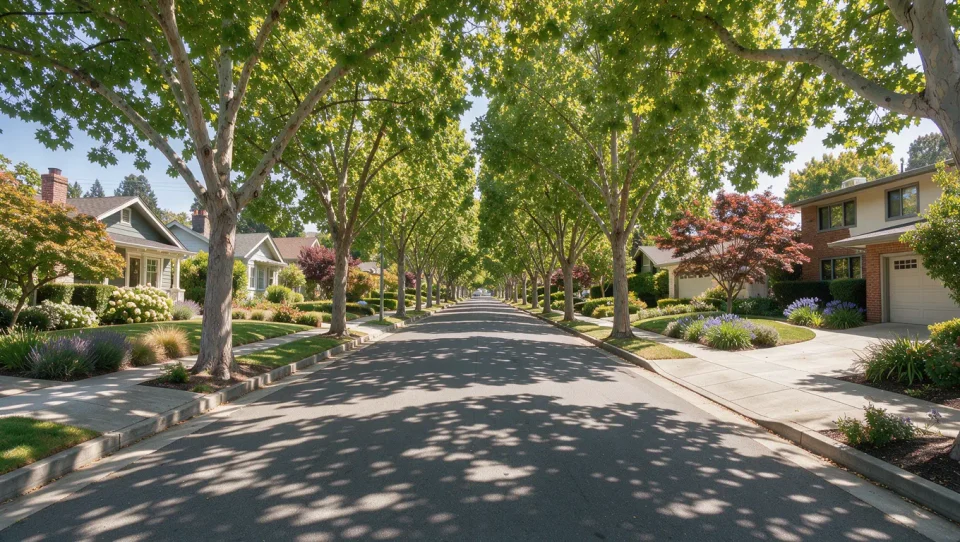
Start with your expected sale price. This is your gross proceeds. In neighborhoods like Willow Glen, along Lincoln Avenue and near the tree-lined streets around Willow Glen Elementary, the number you care about is not the offer price. It is what remains after you subtract everything below.
Subtract your mortgage payoff. Contact your lender for a payoff statement that includes any remaining principal, accrued interest through the expected close date, and any prepayment penalties (uncommon, but worth confirming). If you have a HELOC or second lien, add that payoff too.
Subtract your selling costs. These include real estate commissions, escrow fees, title insurance, the county transfer tax, any buyer credits you negotiate, and repair concessions. I will break these out in detail in the next section.
Subtract your capital gains taxes. This is where Willow Glen sellers often get the biggest surprise, and it is the category I spend the most time walking clients through before we ever put a sign in the yard.
What is left after those three subtractions? That is your net. So how big are those subtractions, really?
Selling Costs That Reduce Your Willow Glen Proceeds
Before any tax conversation begins, your selling costs take the first bite. Here is what you should budget for:
- Real estate commissions. Commission structures have evolved following the 2024 NAR settlement changes, and the specifics of what you pay and what, if anything, you offer a buyer’s agent are now more flexible and more negotiable than they have ever been. With 35 years of experience and over 351 closed transactions, I can tell you that how your commission is structured matters, but what matters more is the strategy behind it. You should discuss current commission practices directly with your agent before listing.
- Escrow and title fees. In Santa Clara County, these typically include the owner’s title insurance policy, escrow processing fees, and document preparation. Your escrow officer will provide a preliminary net sheet before close.
- County transfer tax. Santa Clara County charges a documentary transfer tax based on the sale price. The City of San Jose may also levy a city transfer tax. Ask your agent for the current rates specific to Willow Glen.
- Seller credits, repairs, and concessions. If the buyer negotiates a credit for closing costs or requests repairs after inspection, those come directly out of your proceeds.
- Pre-sale preparation costs. Staging, minor cosmetic updates, landscaping along your front walk. These are upfront out-of-pocket expenses, but in Willow Glen they are a standard part of a competitive listing strategy and can pay for themselves in a higher sale price.
The point is, your selling costs are real dollars off the top, and you need to model them accurately.
Federal Capital Gains Taxes on Your Willow Glen Sale
This is the section where long-time Willow Glen homeowners need to pay the closest attention.
The Section 121 Exclusion
According to IRS Publication 523 for 2025 tax returns, if you sell your principal residence and you have owned and lived in it for at least 2 of the 5 years ending on the date of the sale, you may exclude up to $250,000 of capital gain from your income if you file as a single taxpayer, or up to $500,000 if you are married filing jointly. You can use this exclusion only once every two years.
That sounds generous. And for sellers in many parts of the country, it covers the entire gain. But in Willow Glen, where some homeowners purchased their homes decades ago at prices that were a fraction of current values, the gain can exceed even the $500,000 married-couple threshold by a wide margin.
What Happens to the Gain Above the Exclusion
Any gain that exceeds the exclusion amount is taxable at your applicable long-term capital gains rate. And there is an additional layer: the Net Investment Income Tax (NIIT), which may add a 3.8% surtax on investment income, including home sale gain above the exclusion, when your modified adjusted gross income exceeds the applicable threshold (per the IRS NIIT Q&A page, as of the 2025 tax year).
Here is how that can play out. If a married couple sells their Willow Glen home and realizes $800,000 of gain, and they qualify for the $500,000 exclusion, the remaining $300,000 is potentially subject to both long-term capital gains tax and the NIIT. At a combined hypothetical rate of 23.8% (20% capital gains plus 3.8% NIIT), the federal tax on that $300,000 would be roughly $71,400. That is a significant hit to your net proceeds, and the actual amount depends on your total income and filing status.
What I consistently recommend is that you sit down with a CPA before listing, not after. Model several sale price scenarios and see exactly where you land.
California State Taxes and Your Willow Glen Home Sale
California does not offer a separate, lower rate for capital gains. All capital gain is taxed as ordinary income at your marginal state rate, which can reach up to 13.3% for high earners.
The good news is that California provides its own version of the principal residence exclusion under its Revenue and Taxation Code, and most sellers who qualify for the federal Section 121 exclusion also qualify at the state level. However, the conformity rules can be nuanced, particularly if you rented out part of the home or used a portion for business. Any depreciation you claimed during years of rental use may reduce the excludable amount.
What does this mean in practical terms? If you have taxable gain above the exclusion, you could owe both federal and state taxes on that excess. For a Willow Glen seller with a large embedded gain, the combined state and federal tax bill can represent a meaningful reduction in net proceeds.
A California CPA can model this for your specific situation, including how your other income sources interact with the gain. You can find current state guidance at the California Franchise Tax Board website.
How to Increase Your Net Proceeds Before You List in Willow Glen
You have more control over your net proceeds than you might think. Here are the levers you can pull:
Document Your Adjusted Cost Basis
Your taxable gain is not simply the sale price minus what you originally paid. You can add the cost of capital improvements to your basis, which reduces the gain dollar for dollar. According to IRS Publication 523, capital improvements include additions, remodels, new roofs, HVAC systems, and similar upgrades.
If you remodeled your Willow Glen kitchen, added a bathroom, replaced the roof, or upgraded the landscaping over the years, every documented dollar reduces your taxable gain. Gather your permits, contractor invoices, and receipts before you list. In my experience, sellers who take this step seriously often reduce their tax exposure by thousands of dollars.
Confirm Your Exclusion Eligibility
Make sure you meet the 2-out-of-5-year ownership and use test. If you have been living in your Willow Glen home as your principal residence, you likely qualify. But if you moved out temporarily, rented the home, or used a portion of it as a home office that was separate from the dwelling unit, the allocation rules can reduce or complicate your exclusion. The key detail from IRS Publication 523 is that gain allocable to the nonresidential portion may not qualify for exclusion, and any depreciation adjustments further reduce the excludable amount.
Price and Prepare Strategically
Net proceeds are not just about minimizing costs. They are also about maximizing your sale price. Proper pre-sale preparation, professional staging, and a pricing strategy that generates competitive interest among buyers along corridors like Bird Avenue, the Willow Glen downtown district, and the neighborhoods near Bramhall Park can meaningfully increase your gross proceeds.
With more than $1.3 billion in Silicon Valley residential transactions over my career, I have seen firsthand how the difference between a well-prepared listing and a hastily launched one often exceeds the cost of preparation many times over.
Frequently Asked Questions
What are net proceeds from selling a home in Willow Glen?
Net proceeds are the money you actually keep after subtracting your mortgage payoff, all selling costs (commissions, escrow, title, transfer taxes, credits), and any capital gains taxes owed on the sale. In a high-value market like Willow Glen, the spread between sale price and net can be substantial, so running the numbers early is essential.
How much are capital gains taxes on a Willow Glen home sale in 2026?
It depends on how much gain you have above the federal exclusion. Per IRS Publication 523 for 2025 returns, single filers can exclude up to $250,000 and married joint filers up to $500,000 if they meet the ownership and use requirements. Gain above the exclusion is taxable at your federal rate, and California taxes that gain as ordinary income.
Does California tax capital gains from a home sale differently than the federal government?
California taxes capital gains as ordinary income at your marginal rate, which can reach up to 13.3% for high earners. California does offer its own principal residence exclusion similar to the federal Section 121 exclusion, but you should confirm eligibility with a CPA, especially if you ever rented or used part of the home for business.
What is the Net Investment Income Tax and does it apply to my home sale?
The NIIT may be a 3.8% surtax on certain investment income, including home sale gain that exceeds the Section 121 exclusion, when your modified adjusted gross income exceeds the applicable threshold (per the IRS NIIT Q&A, as of the 2025 tax year). If your gain and income are high enough, this tax may add to your federal bill.
Can home improvements reduce my capital gains tax in Willow Glen?
Yes. Capital improvements such as remodels, additions, new roofs, and HVAC upgrades increase your adjusted cost basis per IRS Publication 523, which reduces your taxable gain. Document these improvements with permits, invoices, and receipts before listing your home.
What selling costs should I expect when selling my San Jose home?
Typical selling costs include real estate commissions, escrow fees, title insurance, county and potentially city transfer taxes, any buyer-requested credits or repairs, and pre-sale preparation expenses like staging. The total varies based on sale price, negotiation outcomes, and the services you choose.
How do I know if I qualify for the capital gains exclusion?
You generally qualify if you owned and used the home as your principal residence for at least 2 of the 5 years ending on the date of the sale, and you have not used the exclusion in the prior 2 years (per IRS Publication 523, 2025 tax year). If you rented the home or used a separate portion for business, partial rules may apply.
What is the best time to sell my home in San Jose for maximum proceeds?
Timing involves both market conditions and your personal tax situation. Buyer activity patterns vary by year and neighborhood, but the “best” time also depends on your moving timeline and how your gain interacts with your other income in a given tax year. A strategic conversation with your agent and CPA can help you pick the optimal window.
How do I prepare my San Jose home for sale to maximize net proceeds?
Pre-sale preparation in neighborhoods like Willow Glen and Cambrian typically includes decluttering, professional staging, minor cosmetic repairs, curb appeal updates, and professional photography. Rated 5 out of 5 stars across 163 client reviews, the approach I take focuses on maximizing the sale price so your net proceeds are as high as possible.
Should I get a CPA involved before listing my Willow Glen home?
Absolutely. A CPA can model different sale price scenarios, calculate your likely federal and state tax exposure, confirm your exclusion eligibility, and help you time the sale to minimize your overall tax burden. In a market where embedded gains are often very large, this step is not optional; it is one of the most valuable conversations you will have before listing.
The Bottom Line
Selling your Willow Glen home in 2026 could put a very large number on your settlement statement, but your net proceeds depend on how well you understand and plan for the costs between that sale price and your bank deposit. Your mortgage payoff, selling costs, and capital gains taxes (both federal and California state) all take their share.
The sellers who walk away with the most are the ones who model every scenario early, document their improvements, confirm their exclusion eligibility, and work with a CPA and an experienced agent who knows this market inside and out. With 35 years in real estate and over 351 closed transactions across Silicon Valley, I have helped hundreds of sellers navigate exactly this process. If you are thinking about selling your Willow Glen or Cambrian home and want a clear picture of your net proceeds, reach out to me, Kip Barnard, at 408-515-8277 or visit kipandtam.com. Let’s build your numbers together before you make your next move.