The Mindset Shift That Separates Top-Dollar Sellers
If you’re thinking about selling your home, there’s one thing you need to do before you talk to an agent, before you look at the sales data, and before you even think about a price.
And almost nobody does it.
It’s not staging, it’s not repairs, and it’s not just decluttering your home. It’s a shift in how you think about your home.
Now, I know that sounds simple, maybe even obvious, but after 20 years of helping homeowners here in Silicon Valley, I can tell you this is the single biggest thing that separates homeowners who get top dollar from homeowners who leave money on the table.
And it’s not even close.
So, let me explain what I mean. Because if you get this right before you sell, everything else gets so much easier.
Most people believe that selling a home successfully comes down to pricing correctly, hiring the right agent, or waiting for the right time. And look, those things matter, but they’re tactical.
The real challenge is psychological.
Why Owning and Selling Require Different Thinking
Owning a home and selling a home require two completely different mindsets. And most people don’t realize how difficult that shift is until they’re already on the market and wondering why things aren’t going the way they expected.
When I was brand new in this business, a mentor shared something with me that completely reframed how I see sellers.
He said, “The biggest hurdle sellers face isn’t pricing or market conditions. It’s the transition from being a homeowner to becoming a home seller.”
Honestly, at first, I didn’t fully grasp it. I was young, focused on learning contracts and comps.
But over the years, and after watching thousands of transactions play out, I’ve seen it happen over and over again.
The people who struggle aren’t less intelligent. They’re not less capable. They just haven’t made that shift yet.
And until that happens, everything else becomes harder.
So, here’s the hard truth. When you’re a homeowner, your house is personal. It’s emotional. It’s filled with meaning.
But the moment you decide to sell your home, it becomes a product in a competitive marketplace.
Buyers aren’t seeing your memories. They’re seeing the price, the square footage, the condition, and how your home stacks up against everything else they’re looking at.
And sometimes, I’ll just be honest, those other homes are better for the price.
So once you’re on the market, you’re no longer the owner. You’re the supplier.
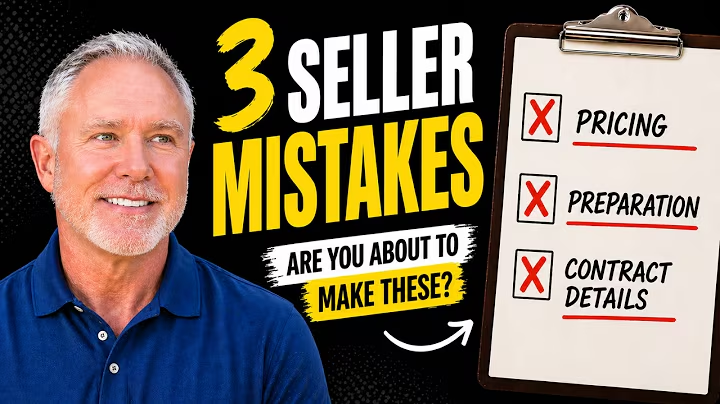
And if you don’t make that mental shift early, I see three things happen almost every time.
How Emotional Pricing Costs San Jose Sellers Thousands
The first one is emotional pricing.
And it sounds something like this: “We’ve put so much into this house,” or “It’s so much better than the one down the street,” or “We’re not giving it away.”
And I get it. I really do.
But the market isn’t evaluating your memories. It’s evaluating alternatives.
Deep down, buyers are always asking themselves one simple question: For this price, what are my options?
And if your home doesn’t clearly win that comparison, momentum stalls.
So, here’s what I do. Whenever I’m working with sellers before they go on the market, I always walk them through the competition first.
Not the comps that sold lately. The active competition. The homes that a buyer is going to be looking at right alongside theirs.
Because the first two weeks here in Silicon Valley on the market determine all of your leverage.
If you haven’t prepared properly, you end up treating those two weeks like a trial run.
And that difference alone can cost tens of thousands of dollars.
The Real Reason Sellers Don’t Listen to Their Agent
Now, the second one, and this one’s a little touchy, but I’m going to say it anyway, is not listening to your agent.
And I don’t mean ignoring them completely. I mean the subtle resistance that happens when your agent tells you something you probably don’t want to hear.
Maybe they recommend a price that feels too low. Maybe they suggest repairs you don’t think are necessary.
Or maybe, and this happens a lot, they tell you that kitchen you love isn’t going to wow the buyers the way you think it will.
And when you’re still in homeowner mode, that advice doesn’t feel like advice. It feels like criticism.
So, you push back.
And I’ll be real with you. I’ve been on the other side of that conversation more times than I can count.
Your agent isn’t working against you. A good agent is showing you how buyers are going to see your home.
The sellers who listen, who really hear it and act on it, those are the ones who go on the market in the strongest possible position.
And the ones who resist usually end up learning the same lesson later. It just costs them more time and more money to get there.
Taking Offers Personally, and How It Backfires
Then the third thing I see is that people start taking negotiations personally.
An offer comes in below what they expected, and they feel insulted.
But before you react, before you fire back or dismiss that offer, you’ve got to step back.
What’s the feedback been like so far? What are the recent sales actually telling you?
All of that is context. And context should be driving your response, not emotion.
Now, that doesn’t mean you accept a lowball offer. It means you understand why it came in where it did and use that to negotiate intelligently.
When I’m negotiating on behalf of my sellers, I’m always thinking about where the buyer stands, what their motivation is, and what they stand to lose.
That’s how you protect your value, not by getting defensive, but by getting informed.
Walk Through the Competition Before You List
In case we haven’t met yet, my name is Kip, and I’ve been a licensed broker for over 20 years here in Silicon Valley.
Besides being a top producer, I’ve sat on the ethics committee here for over a decade. I’ve also managed an office for the number one brokerage in the country, overseeing billions of dollars in sales.
What I enjoy doing more than anything is helping buyers and sellers here in Silicon Valley.
So, let me give you something you can do right now, even if you’re months away from selling.
Start by walking through your home with fresh eyes. Not proud, not defensive, just objective.
Then pull up homes for sale in your price range on Zillow or wherever. Not the ones you hope to compete with, but the ones buyers will actually compare you to.
And ask yourself honestly: If I were spending my own money today, which one would I choose?
I’ve had this experience so many times. I’ll be talking with a homeowner who’s thinking about selling, and I can just tell that the price they have in their head is purely aspirational. There’s just no data to support it.
So instead of arguing about numbers, I like to just take them out to see homes on the market in that price range.
And you know what typically happens?
They walk into a home that’s bigger, has more upgrades, maybe a better lot, and it just clicks.
They realize that’s what a buyer gets for that amount of money.
And that moment of clarity is so valuable.
That’s why I always tell people, don’t just look at photos online. Actually go walk through other homes for sale.
Because once you see what buyers are comparing you to, it changes everything.
And that’s the shift.
That’s the moment you stop thinking like a homeowner and start thinking like a home seller.
And once that happens, it works in your favor no matter what the market is doing because you’re responding to reality instead of hoping the market comes to you.
One Question to Ask Yourself Before You Sell
Now, if you want to go deeper on pricing strategy and what actually makes buyers choose one home over another, I put together a free seller guide. I’ll drop the link in the description below.
But here’s what I want you to take away from this video.
If you’re preparing to sell your home, the most important question isn’t, “What’s my home worth?” or “When should I sell?”
It’s, “Am I thinking about this the right way?”
Because once you are, your decisions change, your pricing changes, your negotiations change, and your outcome changes.
So, if you’re thinking about selling, whether it’s soon or months from now, I’d love to help you see how buyers would evaluate your home today.
No pressure, just clarity.
I’ll drop my info in the description below.
Thanks for watching, and I’ll see you in the next video.