Recent Blog Post
Silicon Valley's Two Economies: What Sellers and Buyers Need to Know Right Now
Recent Blog Post
Turn on the news and you'd think we're headed for a cliff.
Job growth outside healthcare? Basically zero for 13 months. Consumer confidence sitting at recession-level lows. It sounds bad. And for much of the country, it is.
Now look out your window here in Silicon Valley.
Completely different planet.
Two Economies. Two Realities.
AI companies are pouring billions into this region right now. The stock market, driven largely by AI, is generating serious, concentrated wealth. And here's a number worth understanding: a 1% rise in the stock market carries the same spending effect as a 2% raise in wages. People in Silicon Valley aren't just doing fine. They're flush.
At the same time, we still don't have enough homes. We haven't for decades. When AI companies start going public in waves, it won't just be another cycle. It will be more money chasing an already constrained supply of front doors.
The national economic story and the Silicon Valley story are not the same story. Treating them as one is a mistake.
If You're Thinking About Selling
You're in a strong position, but strong doesn't mean effortless.
The buyers active in this market are wealthy, informed, and selective. They are not throwing money around just because they have it. They've seen enough deals to know when something is priced right, prepared well, and worth moving on.
What separates a great sale from a stale listing right now isn't luck or timing. It's preparation. That means pricing it correctly from day one, presenting it in a way that justifies what you're asking, and having your disclosures completely buttoned up before the first showing.
The demand exists. Your job, and ours, is to meet it.
If You're Thinking About Buying
Stop waiting for a crash. It's not coming here.
AI wealth, structurally constrained supply, and a significant wave of IPOs on the horizon: none of those factors are going away. And if interest rates drop even slightly, more buyers flood in and prices move up. That's not speculation. That's supply and demand.
Here's what most people miss: competition is lighter right now than it's going to be once those IPOs hit. Your personal financial readiness matters far more than whatever the national headlines are shouting about today.
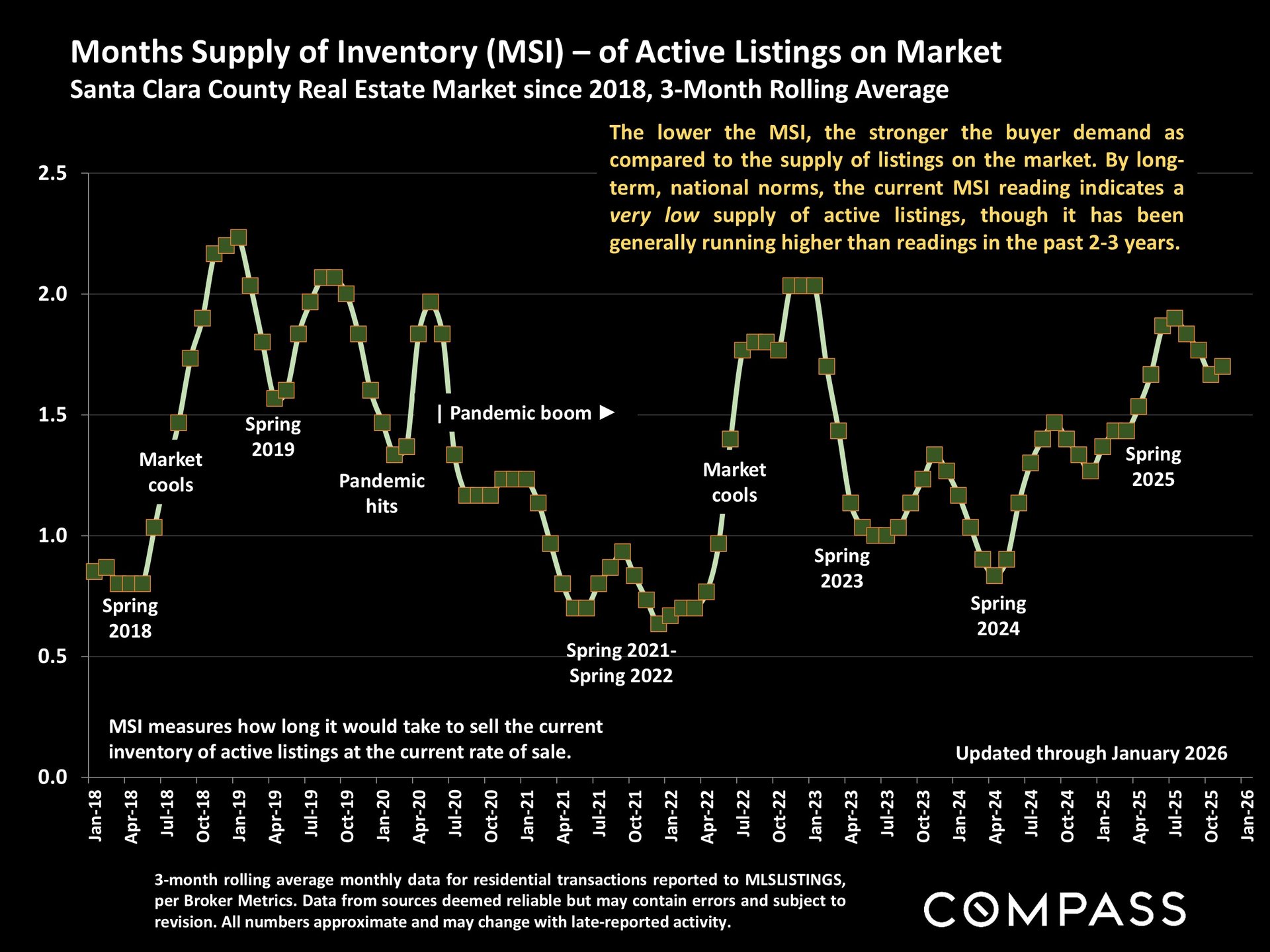
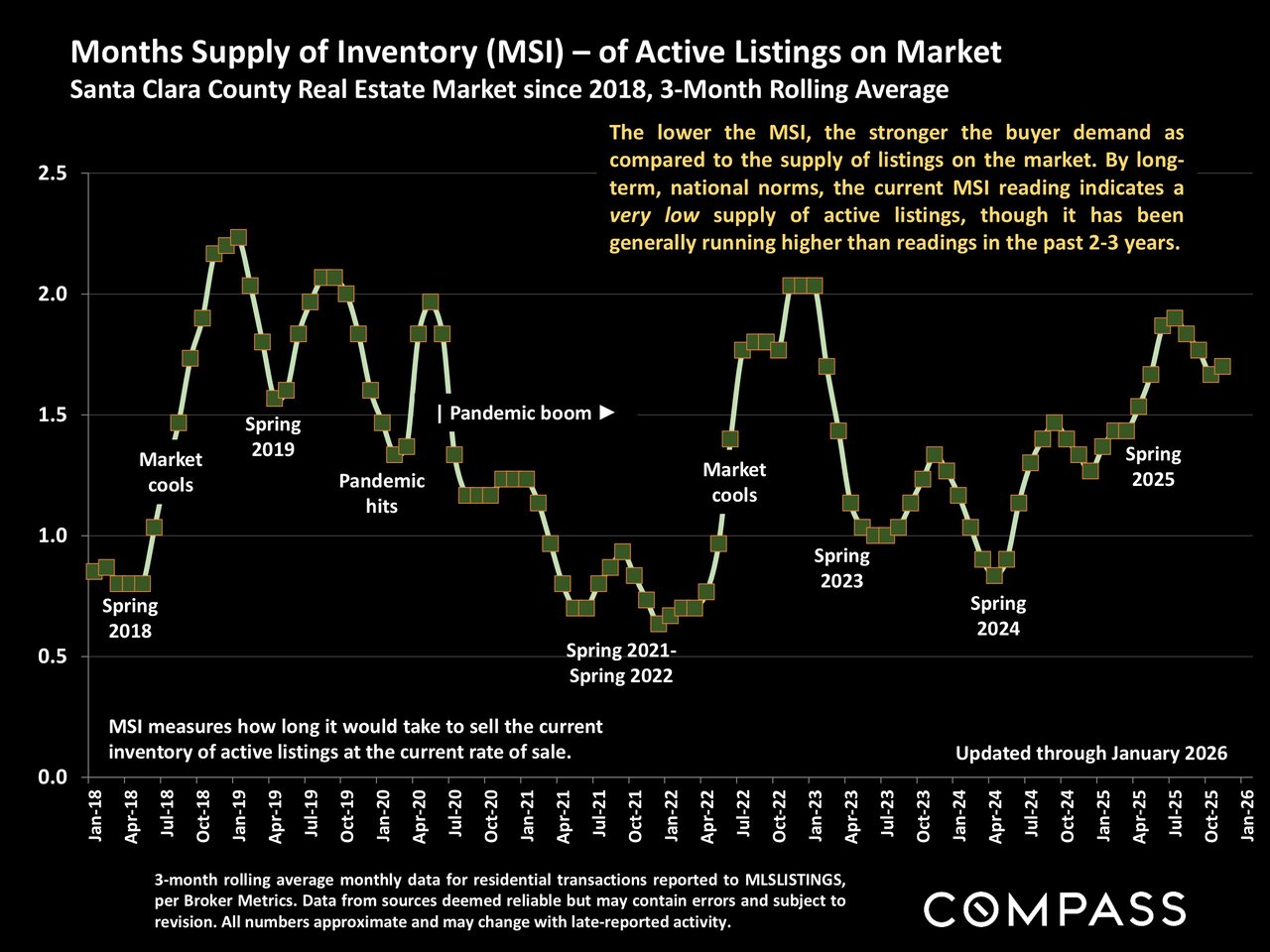
[IMAGE PLACEHOLDER: Insert Silicon Valley housing inventory chart here. Suggested caption: "Santa Clara County housing inventory 2020–2025, illustrating persistently low supply relative to buyer demand. Source: MLS data / Alt text: "Silicon Valley housing inventory chart 2020-2025 showing constrained supply and low home availability in Santa Clara County."]
What This Means Street by Street
The two-economy story isn't abstract. You can see it playing out across specific Silicon Valley neighborhoods right now.
In Willow Glen, well-prepared homes in the core neighborhood continue to draw strong interest from buyers who know exactly what they want and aren't easily swayed by national noise. Cambrian and Almaden attract move-up buyers and established tech professionals who have largely insulated themselves from broader economic volatility. Campbell sits at an interesting intersection of affordability relative to its neighbors and genuine lifestyle appeal, making it a consistent target for buyers priced out of Los Gatos or Saratoga but unwilling to compromise on quality. Santa Clara benefits directly from its proximity to major tech campuses and sees consistent demand from buyers with significant equity compensation.
These aren't markets that move in lockstep with the national numbers. They move with hiring cycles, stock valuations, and IPO calendars. That local specificity matters when you're making a decision this size.
Frequently Asked Questions
Will Silicon Valley home prices drop in 2025? A significant price correction in Silicon Valley is unlikely given current conditions. The region's supply has been structurally constrained for decades, and demand is being reinforced by AI sector growth, stock market wealth, and a pipeline of anticipated IPOs. Prices may soften modestly in specific segments if rates stay elevated, but a broad decline of the kind seen in other parts of the country is not supported by local fundamentals.
How does AI wealth affect the Silicon Valley housing market? AI-driven stock market gains translate directly into purchasing power for Silicon Valley buyers. Research shows that a 1% increase in stock market value has approximately twice the spending impact of a 1% wage increase. As AI companies grow, go public, and distribute equity, that wealth concentrates in the same zip codes where housing supply is tightest. The result is sustained demand pressure that doesn't respond to national economic downturns the way other markets do.
Is now a good time to sell a home in San Jose or Silicon Valley? For well-prepared sellers, yes. Buyer demand from high-income, equity-compensated professionals remains active. The risk isn't lack of demand, it's listing without being fully prepared. Homes that are priced accurately, presented well, and backed by clean disclosures are moving. Homes that aren't are sitting, regardless of the market.
Should I wait for interest rates to drop before buying in Silicon Valley? Waiting for rate drops carries real risk in this market. Lower rates bring more buyers into the pool, which increases competition and tends to push prices up. The buyers who fare best in Silicon Valley are those who enter when competition is manageable and their finances are solid, not those who time rates perfectly. Right now, before a wave of IPOs adds more buyers, may be a more strategic entry point than it appears.
Why is Silicon Valley real estate different from the rest of the country? The region's housing market is driven by a narrow set of powerful factors: concentrated tech and AI wealth, decades of underbuilding relative to job growth, and an employer base that generates equity compensation rather than just wages. These conditions create demand that is largely disconnected from national consumer confidence numbers or broader employment trends. When the rest of the country slows, Silicon Valley often doesn't, or at least not in the same way or at the same pace.
The Bottom Line
Silicon Valley runs on its own economic engine. Understanding which economy you're actually operating in changes every decision that follows, whether you're selling, buying, or sitting on the fence.
If you want a clear read on where you stand and what your move should be, that's exactly the conversation we're built for.
Kip and Tam | Barnard Group - San Jose
DRE# 01428934 | Compass

Relocating to San Jose
Here's What Willow Glen and Cambrian Feel Like to Actually Live In

Buyer Tips

Buyer Tips
The 12 Questions Every Seller Should Ask

Market Updates

Seller Tips
Before you price it, stage it, or call an agent, there's one thing that separates sellers who win from sellers who wonder what went wrong.

Cambrian

Cambrian

Cambrian

Buyer Resources
Underrated, established, and quietly one of the best-value neighborhoods in the entire South Bay
We believe the process of buying or selling your home should be enjoyable as well as rewarding. Our commitment to our clients is to work hard and provide them with a hassle-free, fun experience. We know how to make this stressful time much easier with our professional expertise, marketplace knowledge, high-tech marketing strategies as well as our enthusiastic team spirit.